
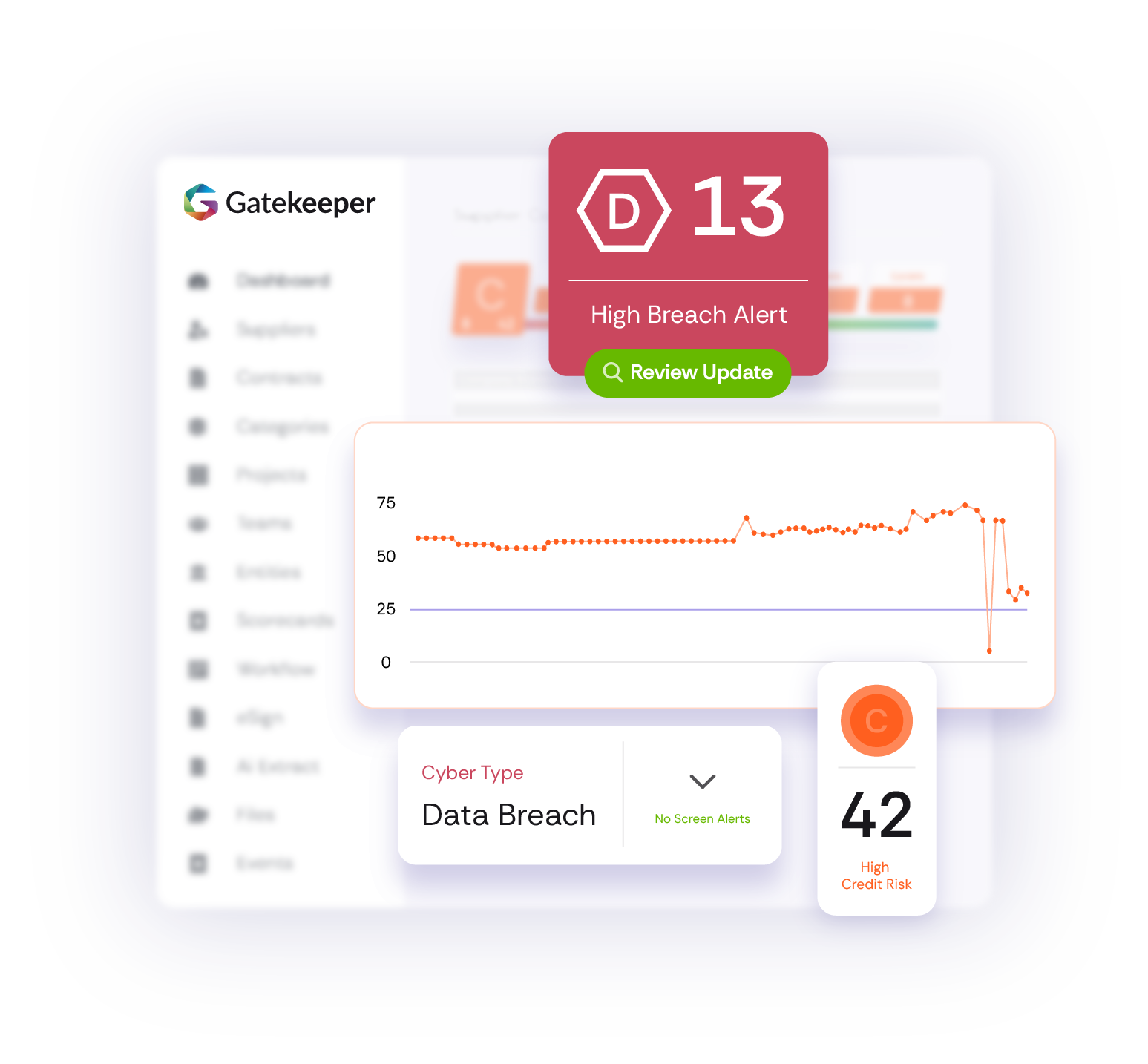
As reliance on third parties grows - vendors, suppliers, partners, subcontractors - so does exposure. Each relationship can drive value, but also introduces risk, spend, and operational complexity. Managing these relationships through disconnected tools or informal processes is no longer sustainable.
Many organizations still approach vendor management in fragments: a due diligence questionnaire at onboarding, a contract stored elsewhere, spend data buried in finance systems. The result is a broken view of the vendor lifecycle.
From a vendor management perspective, the real challenges don’t live in any single step. They surface across the entire lifecycle, including:
Inconsistent third-party risk and due diligence checks during onboarding
Uncontrolled renewals and spend leakage once vendors are live
Vendor, compliance, and performance data trapped in silos across teams
When vendor information is scattered, organizations lose control at the moments that matter most - onboarding, renewal, audit, and cost review. Risk is assessed once and forgotten. Compliance evidence is chased reactively. Spend creeps up quietly through auto-renewals and duplicate suppliers.
That’s why leading organizations are moving beyond point solutions to a unified contract and third-party management platform - one that connects onboarding, risk and compliance, contracting, renewals, and spend into a single continuous process. The result is proactive, company-wide control across every third-party relationship, not reactive clean-up after issues surface.
Vendor lifecycle management software is designed to help organizations control third-party relationships from the moment a vendor is requested through onboarding, renewal, and exit. Its primary focus is ensuring vendors are approved correctly, assessed for risk, and monitored over time.
At a foundational level, VLM software brings structure to vendor-centric activities such as:
Vendor intake and onboarding, with standardized requests and approvals
Risk and compliance checks before vendors access systems, data, or spend
Centralized vendor records that track ownership, status, and documentation
Ongoing monitoring of renewals and vendor activity
These capabilities matter, because vendor risk and cost are introduced at onboarding—not at contract signature.
However, traditional vendor lifecycle management still stops short.
Most VLM tools focus on vendor status, not on the commercial and legal controls that govern the relationship once the vendor is active. Contracts often live elsewhere. Spend data lives in finance systems. Obligations and renewal terms are disconnected from both. As a result, vendor oversight fractures as soon as onboarding is complete.
When vendor lifecycle management operates in isolation, organizations remain exposed to:
Vendors approved through due diligence, but contracted outside policy
Contracts signed without real-time visibility into vendor risk posture
Renewals occurring without context on vendor performance, risk, or spend
Compliance evidence collected once, then allowed to go stale
In other words, VLM improves how vendors enter the business - but not how they are governed once they are in it.
This is why vendor lifecycle management alone is no longer enough.
True control requires unifying vendor onboarding with the contracts that define the relationship and the spend that validates its value. Without that connection, vendor risk, compliance, and cost drift back into silos—forcing teams to react after issues surface.
Modern organizations don’t struggle with contracts in isolation - they struggle with the volume and complexity of third-party relationships. Vendors, suppliers, partners, and subcontractors enter the business constantly, each introducing potential risk, cost, and compliance exposure.
Vendor lifecycle management software addresses this by standardizing how third parties are brought into, governed within, and exited from the organization. When done well, it delivers clear benefits across the vendor lifecycle:
More controlled vendor onboarding
Standardized intake and approval workflows ensure vendors are reviewed consistently before they gain access to systems, data, or spend.
Improved third-party risk and compliance visibility
Centralized vendor records make it easier to understand risk posture, certification status, and ownership at any point in time.
Clearer accountability after onboarding
Defined owners and lifecycle stages reduce the “set-and-forget” problem that leads to stale risk data and compliance gaps.
Better renewal awareness
Vendor-level visibility helps teams understand which relationships are still active, which should be renewed, and which should be exited.
These benefits explain why vendor lifecycle management adoption has increased. But they also reveal its limitation.
Traditional VLM tools focus on vendor status, not on the commercial and legal controls that govern the relationship once a vendor is active. Contracts often live elsewhere. Renewal terms aren’t connected to risk posture. Spend data sits in finance systems. As a result, oversight fragments as soon as onboarding is complete.
This is why vendor lifecycle management alone is no longer enough.
True vendor control requires unifying vendor onboarding with the contracts that define the relationship and the spend that validates its value. Without that connection, risk, compliance, and cost drift back into silos—forcing teams to react after renewals auto-roll, audits fail, or spend balloons.
That’s why leading organizations are moving beyond standalone VLM to a unified contract and third-party management platform—where vendor onboarding, risk, contracts, renewals, and spend remain continuously connected throughout the lifecycle, not reconciled after the fact.
With Gatekeeper, vendor onboarding, risk and compliance, contracts, renewals, and spend operate as a single continuous system. Control begins before a vendor is approved and persists through renewal and exit - without handoffs, re-keying, or blind spots.
Customers experience this shift in practice.
Rather than optimizing one stage of the process, Gatekeeper unifies how third parties are approved, governed, contracted, and renewed - so risk, compliance, and cost remain connected throughout the relationship.
Many platforms still use AI in narrow, reactive ways - summarizing documents, tagging clauses, or improving search. These capabilities help teams consume information faster, but they don’t change how vendor management actually operates. People still initiate onboarding, chase risk reviews, coordinate approvals, and manually reconcile vendor data across systems.
The next evolution of vendor lifecycle management is powered by agentic AI - AI that doesn’t just interpret data, but continuously executes work across vendor onboarding, risk and compliance, contracting, and ongoing governance.
Gatekeeper’s LuminIQ AI agents are built for this model.
Rather than living inside a single workflow, LuminIQ agents operate across the full third-party lifecycle. They qualify vendors before onboarding, surface risk and compliance gaps, streamline approvals, and keep vendor relationships governed long after activation - reducing manual effort while increasing organizational control.
The impact is clearest where vendor oversight used to break down.
As vendor counts rise and compliance expectations tighten, the best platforms in 2026 will be judged on whether they can:
Govern vendors continuously, not just at onboarding
Reduce risk and review effort without adding headcount
Keep executives informed without pulling them into day-to-day process
Agentic AI makes that possible - by turning vendor lifecycle management from a series of manual checkpoints into a continuously managed system.
And that’s why the future of vendor management isn’t just automated. It’s agent-led.
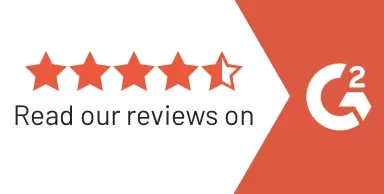
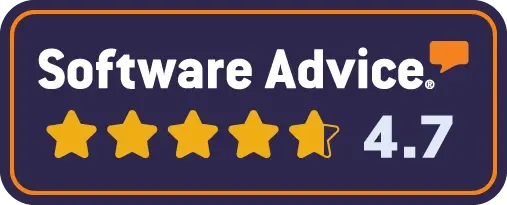
When comparing vendor management software, third-party review platforms like G2 can be a useful starting point. Independent customer feedback helps validate how platforms perform in real operating environments - not just in demos.
To assess vendor management solutions effectively, focus on three core criteria: ease of use, ease of implementation, and quality of support.
Vendor management software should be intuitive for every team involved in third-party oversight -Procurement, Compliance, Legal, Finance, and IT. Users should be able to onboard vendors, review risk, track approvals, and monitor status without extensive training or reliance on specialists. The easier the platform is to use, the faster teams can adopt consistent vendor controls across the organization.
Time-to-value matters. The best vendor management platforms are quick to deploy and integrate into existing workflows, without requiring long implementation cycles or heavy customization. A low-friction setup allows organizations to start standardizing vendor onboarding, risk reviews, and renewals immediately—without disrupting day-to-day operations.
Strong vendor management depends on reliability. Responsive, knowledgeable support ensures issues are resolved quickly and processes stay moving, especially during audits, renewals, or regulatory reviews. Ongoing support also helps teams adapt workflows as vendor volumes, risk profiles, and compliance requirements evolve.
From a business perspective, these factors directly influence how quickly vendor management improvements translate into measurable outcomes—reduced risk exposure, lower operational overhead, and stronger return on investment.
| Platform | Ease of Use | Ease of Setup | Quality of Support |
|---|---|---|---|
| Gatekeeper | 9.0 | 8.1 | 9.4 |
| SirionLabs | 8.6 | 7.4 | 9.3 |
| Coupa | 8.3 | 7.3 | 7.8 |
| Icertis | 8.0 | 7.6 | 8.4 |
| Ironclad | 8.9 | 8.2 | 8.9 |
Gatekeeper goes beyond traditional vendor lifecycle management by addressing where VLM typically breaks down. While VLM tools help control vendor onboarding and status, they often stop short of governing the contracts and spend that define the real risk and value of the relationship.
Gatekeeper unifies vendor onboarding, risk and compliance, vendor contracts, renewals, and spend in a single continuous platform, ensuring control doesn’t fragment once a vendor is approved.
With LuminIQ AI agents embedded across the lifecycle, risk is qualified before engagement, contracts are executed within policy-aligned guardrails, and compliance and cost are monitored continuously- so third-party relationships remain controlled, auditable, and optimized end to end, not managed in silos.
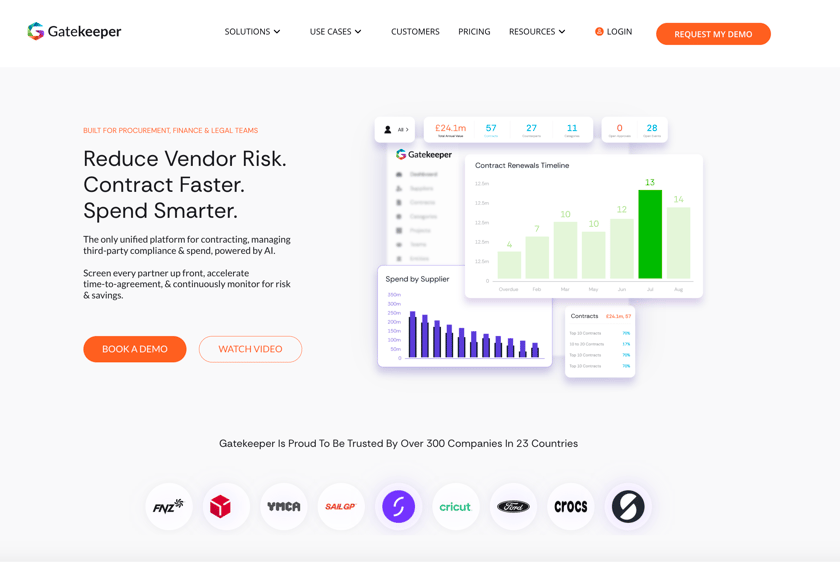
Gatekeeper is well credited for its:
Customer reviews of Gatekeeper highlight:
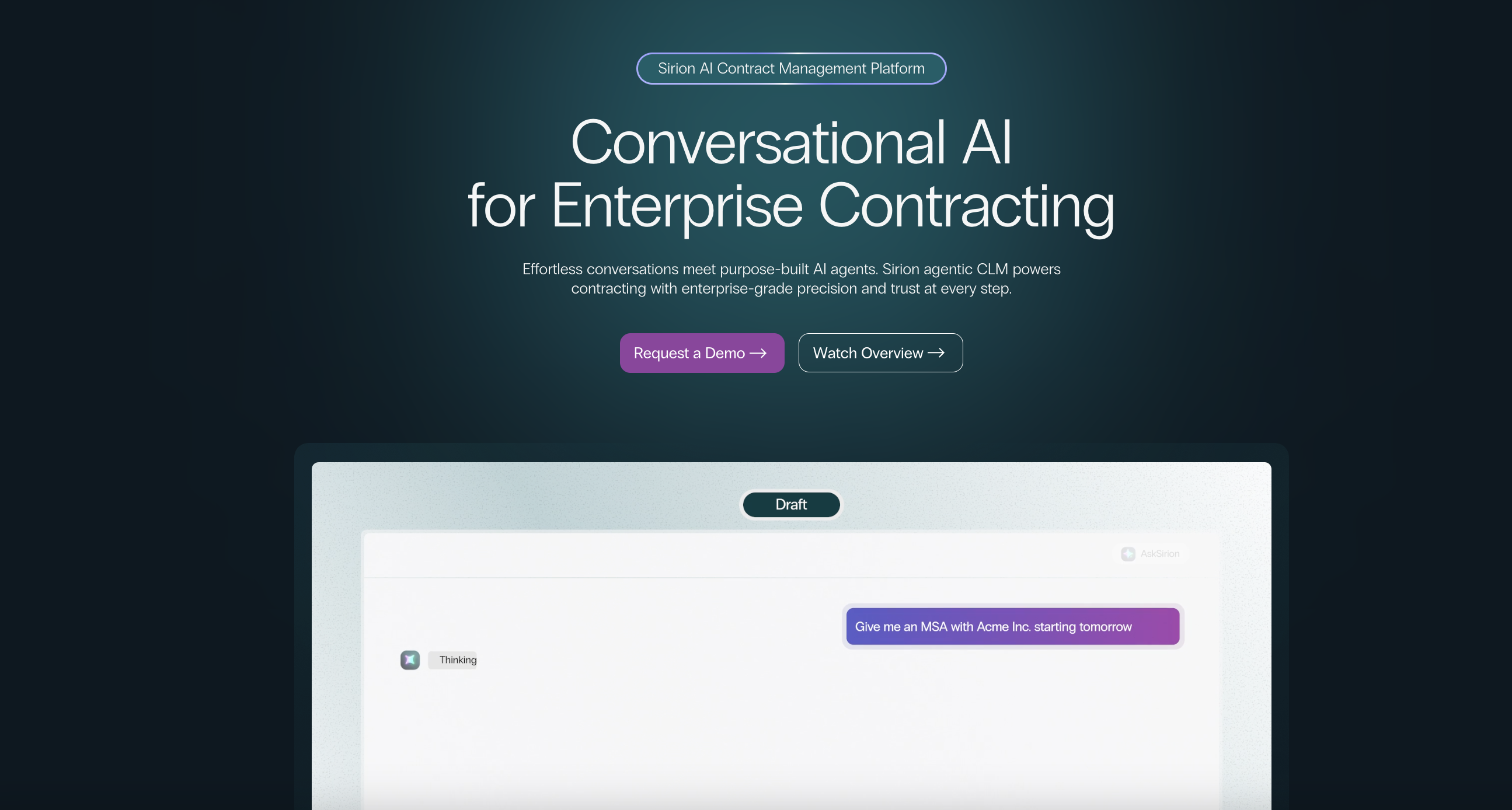
Sirion's next-generation agentic AI-native Contract Lifecycle Management (CLM) platform transforms vendor management through practitioner-grade AI agents and conversational contracting. Built on agentOS™, the platform deploys specialized AI agents that automate contract drafting, negotiation, obligation tracking, and supplier performance monitoring in plain English.
Ease of Use: SirionLabs scores 8.6 on G2, compared to Gatekeeper’s 9.0. Users often find SirionLabs complex and unintuitive, leading to slower adoption and higher training demands. In contrast, Gatekeeper’s user‐friendly design ensures teams can easily navigate the platform and manage contracts efficiently.
Ease of Setup: With a 7.4 rating on G2, SirionLabs requires more time and resources to implement, often causing delays. Gatekeeper, rated 8.1, streamlines deployment, allowing organisations to get up and running quickly and realise value sooner.
Customer Support: While SirionLabs holds a 9.3 rating for support, users report slower issue resolution and extended back‐and‐forth communication. Gatekeeper goes further, offering highly responsive, proactive support to ensure users receive timely assistance and maximise their platform experience. SirionLabs Customer Reviews:
Coupa's AI-native Total Spend Management platform revolutionizes vendor management through Navi™ AI agents . The platform automates supplier discovery, onboarding, compliance monitoring, and performance tracking while providing real-time visibility into cost, reliability, service quality, and compliance status.
Integrated collaboration tools and AI assistants enable seamless communication between procurement teams and vendors, reducing delays in contract negotiations and approvals.

Coupa customer reviews reveal that:
Icertis enhances vendor management through its AI-native Icertis Contract Intelligence (ICI) platform, powered by Vera, which streamlines supplier onboarding, tracks vendor performance, and ensures compliance through the Supplier Relationship Management (SRM) application and Vera Agents.
The platform's advanced risk management capabilities proactively assess and monitor supply chain risks using intelligent risk scores, real-time compliance tracking, and cascading obligation analysis across complex supplier networks, helping organizations mitigate operational, financial, and reputational threats.
Customer reviews of Icertis show:
Ironclad's AI-native CLM platform, while not purpose-built for vendor lifecycle management, effectively supports vendor management workflows through automated contract creation, AI-powered redlining, and streamlined approval routing that eliminates procurement bottlenecks.
Automated workflows with AI Playbooks flag contract risks and compliance issues, ensuring vendor agreements are reviewed and approved efficiently while maintaining full auditability.
Ironclad customer reviews highlight:
Most vendor management tools solve only part of the problem. They help teams onboard vendors, collect questionnaires, or track status - but they leave contracts, renewals, compliance evidence, and spend scattered across other systems. The result is more tools, more handoffs, and less control once a vendor is approved.
Gatekeeper is different by design.
Gatekeeper is a unified contract and third-party management platform that brings vendor onboarding, risk and compliance, contracts, renewals, and spend into one continuous system. Instead of managing vendors in isolation, teams manage the entire third-party relationship end to end - without losing visibility or accountability as vendors move through the lifecycle.
This unified approach matters because vendor risk, cost, and compliance don’t live in one place. They are created at onboarding, defined in the contract, and proven over time through performance, renewals, and spend. Gatekeeper keeps all of that connected in a single source of truth, so control doesn’t break the moment a vendor is activated.
What truly sets Gatekeeper apart is how AI is applied.
With LuminIQ AI agents embedded across the platform, Gatekeeper goes beyond automation to active governance. AI agents qualify vendor risk before approval, review contracts against policy, surface material issues for decision-makers, monitor compliance evidence, and flag renewal and cost risks automatically. Teams stay in control, but the manual work disappears.
This changes how vendor management teams operate:
Procurement can onboard vendors faster without bypassing risk
Compliance stays audit-ready without chasing evidence
Legal reviews fewer contracts, but with higher confidence
Finance gains visibility into renewals and vendor spend before value leaks
Because the platform is unified, every team works from the same data and the same lifecycle - eliminating silos, duplicated effort, and blind spots.
The result is vendor management that actually scales. Teams govern more vendors without adding headcount, executives stay informed without becoming bottlenecks, and organizations maintain continuous control across risk, compliance, and cost.
That’s why Gatekeeper isn’t just another vendor management tool. It’s the platform teams choose when they need vendor oversight that’s unified, risk-first, AI-driven, and built for the reality of modern third-party ecosystems.
Book a demo to see how Gatekeeper unifies vendor onboarding, risk, contracts, and spend—so your team stays in control from day one.
Gatekeeper is unified, risk-first, AI-driven, and built for the reality of modern third-party ecosystems.

Before Gatekeeper, our contracts
Anastasiia Sergeeva, Legal Operations Manager, BlaBlaCar
were everywhere and nowhere.
Gatekeeper is that friendly tap on the shoulder,
Donna Roccoforte, Paralegal, Hakkasan Group
to remind me what needs our attention.
Great System. Vetted over 25 other systems
Randall S. Wood, Associate Corporate Counsel, Cricut
and Gatekeeper rose to the top.
