What is Contract Renewal Management?
Contract renewal management is the discipline of proactively controlling when and how third-party agreements are extended, renegotiated, or terminated. It ensures that every renewal decision reflects current business priorities, not outdated assumptions.
For procurement and finance leaders, this moment represents a strategic inflection point - not just a routine checkpoint. It’s when you decide whether a vendor continues to deliver value, meets compliance requirements, and aligns with your evolving risk appetite.
When managed with intent, contract renewals become a mechanism for driving savings, improving performance, and reducing operational risk. When ignored or left to chance, they become a source of spend leakage, audit exposure, and missed leverage.
What makes contract renewal management so difficult?
Despite its strategic importance, many organisations still treat contract renewals as operational afterthoughts - relying on spreadsheets, calendar alerts, or disconnected point tools.
These surface-level solutions might help individuals track deadlines, but they don’t unify contract data, risk insights, and spend exposure. The result? A fragmented contract renewal process that leaves the business open to hidden costs and compliance failures.
Here are the most common breakdowns:
-
No single system of truth: When contracts live across email threads, shared drives, and siloed tools, key terms and obligations go unseen. A missed renewal on a vendor tied to production compliance could halt operations or trigger certification failures.
-
Auto-renewals without review: Contracts that roll over silently lock the business into outdated pricing, unfavourable terms, or non-compliant practices. For finance teams, missing a renewal on a data processor could result in regulatory fines or audit failures.
-
Siloed teams, siloed tools: Procurement, legal, finance, and compliance often manage renewals in isolation. Without shared visibility, high-risk agreements fall through the cracks.
-
Poor prioritisation: Not all renewals carry equal weight. Without a unified system to flag contract value and risk, teams spend time on low-impact renewals while high-stakes agreements go unexamined.
-
No time to negotiate: When renewals are flagged just days before expiration, it’s too late to renegotiate terms or assess alternatives. This leads to rushed decisions, missed leverage, and in some cases, renewed contracts that actively work against business goals.
What are the risks and Costs of poor contract renewal management
When contract renewals are managed in silos or tracked manually, the consequences quickly escalate beyond administrative oversight. What starts as a missed date or buried clause can become a business-critical failure.
Poor renewal management leads to:
-
Regulatory exposure: Lapsed or outdated agreements can put the business out of compliance with key regulations. A missed renewal on a data processing agreement could lead to continued data sharing under outdated or non-compliant terms - potentially breaching GDPR or failing to meet DORA-aligned obligations for financial entities
-
Margin erosion: Silent auto-renewals lock in uncompetitive pricing. Missed renegotiation windows prevent teams from recovering value, securing better terms, or driving vendor consolidation savings.
-
Operational disruption: In regulated sectors like healthcare or finance, a missed renewal tied to core systems or service providers can stall operations and break client trust.
-
Reputational damage: Renewal mismanagement reflects weak governance. It undermines confidence with executives, auditors, and vendors - especially when strategic agreements fall through the cracks.
-
Lost commercial leverage: Every renewal is a chance to renegotiate value. Without unified visibility across contracts, spend, and risk data, those moments pass unnoticed - and so do the savings, efficiencies, and performance gains they could unlock.
Organisations that treat renewals as strategic control points - backed by a unified platform that connects contract, third-party, and spend data - don’t just avoid risk. They turn every renewal into an opportunity to drive better outcomes.
How Do You Build a Best-Practice, AI-Powered Contract Renewal Strategy?
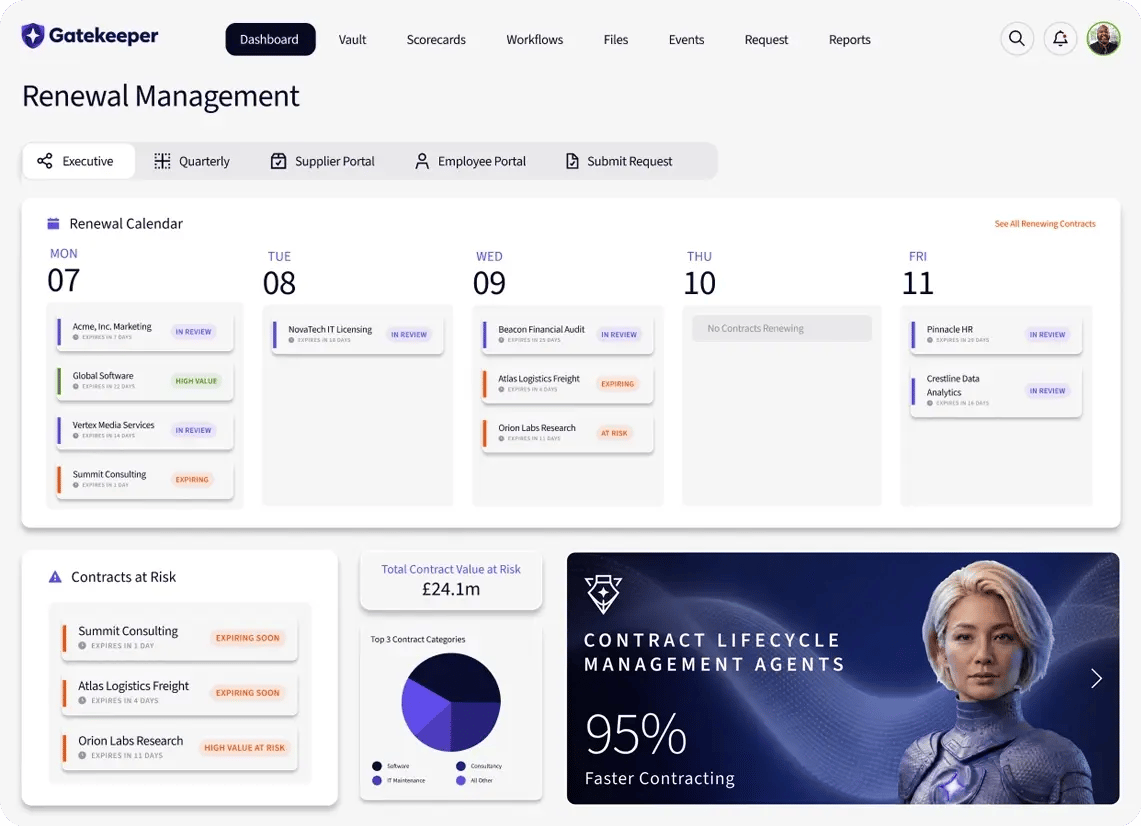
A modern contract renewal strategy is powered by AI, not spreadsheets. It automatically surfaces upcoming renewals, prioritises them by value and risk, and drives action through automated workflows.
This approach turns renewals into strategic levers - giving procurement and finance teams the visibility, time, and data to renegotiate terms, enforce compliance, or exit relationships that no longer deliver.
With Gatekeeper Agents, renewal triggers are never missed, contracts are continuously monitored, and decisions are backed by real-time risk, spend, and performance signals. To create a best-practice, AI-powered contract renewal strategy, implement the following steps:
How to Build an AI-Powered Contract Renewal Strategy
1. Use AI to Drive Strategic Outcomes From Every Renewal
Every contract renewal should serve a strategic purpose. Whether it's driving cost reduction, consolidating vendors, improving performance, or tightening compliance, goals should be clear and measurable. Without clear objectives, renewals risk becoming passive extensions of outdated terms - locking in inefficiencies and hidden risks.
AI contract renewal management aligns these objectives with automated intelligence- tracking outcomes, identifying opportunities, and ensuring renewals support wider business priorities like resilience, cost control, and sustainability. LuminIQ helps define and surface these objectives across your contract portfolio, transforming renewals into strategic checkpoints for continuous improvement.
2. Make Compliance Central to Every Renewal
Renewals are a natural trigger to assess whether contracts are still fit for purpose. That means reviewing vendor performance, obligations, and compliance requirements through a current lens. A vendor that once met expectations may now be out of step with GDPR, DORA, or industry standards - posing real regulatory exposure.
Gatekeeper Agents embed compliance signals directly into contract records and flag gaps based on risk intelligence signals and performance data- so teams can act before issues escalate and protect against audit failures, fines, and reputational harm.
In a renewal context, this ensures no contract is extended without first passing through a compliance review.
3. Break Down Silos to Strengthen Renewal Decisions
Contract renewals cut across legal, procurement, finance, compliance, and IT. Misalignment between these teams often results in missed risks, delayed approvals, or conflicting priorities. When renewal decisions are made in silos, key opportunities and threats go unnoticed.
Gatekeeper uses best-practice workflows to automate stakeholder alerts and task routing, ensuring the right people are looped in early based on contract type, risk, or value.
This cross-functional collaboration is essential to successful contract renewal management - improving accuracy, reducing cycle times, and ensuring all perspectives are considered in the decision to renew, renegotiate, or exit.
4. Focus Renewal Efforts Where They Matter Most
Not every contract deserves the same level of scrutiny. High-risk or high-value agreements - especially those tied to revenue, regulation, or operational continuity - demand proactive attention at renewal.
Gatekeeper Agents score and classify contracts automatically based on risk, spend, and strategic value - enabling procurement and legal teams to prioritise renewals that carry the most impact. This ensures that limited resources are focused on negotiations that materially affect cost, compliance, and business continuity.
5. Establish a Renewal Timeline Powered by Predictive Triggers
Starting the renewal process too late eliminates time for proper assessment or renegotiation. It leaves organisations reactive - locked into unfavourable terms or exposed to regulatory risk.
AI-powered triggers surface key dates well in advance - factoring in clause timelines, risk profiles, and historic renewal patterns.
Gatekeeper provides predictive alerts that create space for thorough evaluation, stakeholder consultation, and value-driven decision-making. A structured renewal timeline is the foundation of a successful strategy.
6. Negotiate from a Data-Driven Position of Strength
The renewal phase is a rare opportunity to reset commercial terms - but only if backed by the right insights. Too often, organisations renew without evidence, forfeiting leverage and value.
AI links vendor performance, historical spend, compliance gaps, and market benchmarks - empowering teams to renegotiate with authority.
With real-time intelligence embedded into renewal workflows, businesses can confidently push for better pricing, service levels, or contractual protections, turning renewals into commercial wins.
7. Replace Siloed Tools with a Unified, Intelligence-Driven Platform
Disconnected systems create blind spots in the renewal process - where critical dates, risk signals, or contract terms slip through the cracks. A successful renewal strategy requires complete visibility and seamless execution.
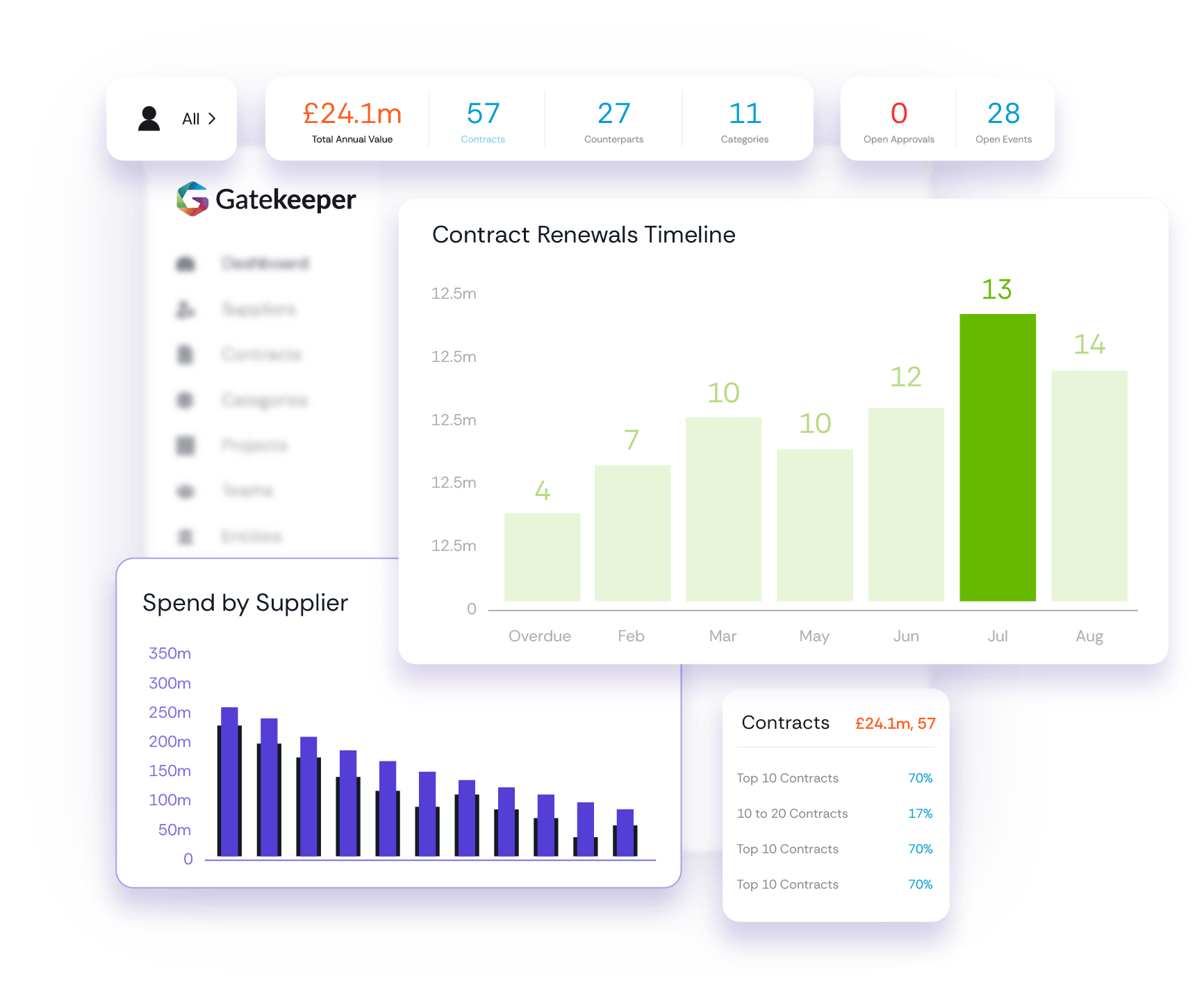
Gatekeeper unifies contracts, spend, and third-party data into a single platform. Renewals are no longer ad hoc - they're tracked, risk-scored, and routed automatically through optimised workflows.
This operational consistency improves accuracy, reduces overhead, and ensures that every renewal is informed and intentional.
8. Continuously Monitor and Optimise with AI Feedback Loops
Contract renewal strategies must evolve alongside changing regulations, vendor performance, and business priorities. Static approaches lead to missed risks and diminishing value.
Gatekeeper Agents enable continuous improvement by learning from every renewal cycle. It tracks outcomes, updates risk models, and sharpens prioritisation - ensuring your renewal strategy gets smarter and more effective over time. This creates a self-improving system where each renewal informs the next, enhancing governance, performance, and ROI.
Contract Renewals in Action: How Melbourne Racing Club Gained Control with Gatekeeper
Melbourne Racing Club (MRC), a multi-venue, high-growth business, had outgrown its manual contract management processes - facing missed renewals, unintentional auto-rollovers, and inconsistent contract storage across departments.
Gatekeeper provided MRC with a unified platform to bring visibility, control, and predictability to every contract renewal. By centralising contracts, automating key date alerts, and enabling seamless contract reassignment, MRC significantly reduced renewal risk and ensured proactive, compliant decision-making.
Today, MRC leverages Gatekeeper to:
-
Eliminate missed renewals with automated, stakeholder-configured notifications
-
Centralise contracts for fast, accurate search and retrieval
-
Maintain continuity with effortless contract ownership transfers
-
Protect negotiation windows and reduce contractual risk exposure
MRC’s contract renewal process is now aligned, intelligent, and built for scale—freeing the legal and procurement teams to focus on strategic value, not administrative firefighting.
Wrap up
Contract renewals should never be treated as routine deadlines. Managed well, they are strategic checkpoints - opportunities to reinforce compliance, recover margin, and strengthen vendor relationships. Managed poorly, they become silent risks that erode trust and profitability.
Gatekeeper transforms renewals by unifying contracts, third parties and spend data into a single platform, powered by Gatekeeper Agents. The result is simple: no missed renewals, no compliance surprises, and no wasted spend. Instead, every renewal becomes a moment of clarity and control.
Ready to see how Gatekeeper can turn renewals from hidden risks into measurable value? Book a demo today and experience how our unified platform helps you stay ahead of every renewal with confidence.

 Integrations
Two-way data flow with the systems you already run.
Integrations
Two-way data flow with the systems you already run.
 NetSuite
Native two-way sync for vendor records, contracts and spend.
NetSuite
Native two-way sync for vendor records, contracts and spend.
 Why Gatekeeper
One platform instead of spreadsheets, inboxes and point tools.
Why Gatekeeper
One platform instead of spreadsheets, inboxes and point tools.






%20(1)-2.png?width=80&height=39&name=MRC%20Logo_BLACK_Stacked%20Justified%20(1)%20(1)-2.png)
