






Trusted by companies you know and love






The finance team challenge
Accountable for spend, blind to what drives it.
Your ERP tells you what you paid a vendor last quarter. It doesn't tell you what you agreed to pay, whether the contract should have been renewed, or if anyone checked that vendor's credentials before the first invoice arrived.
The contract lives in a shared drive, the risk assessment (if it happened) lives in someone's inbox, spend data lives in the ERP, and none of them talks to each other.
How Gatekeeper Helps
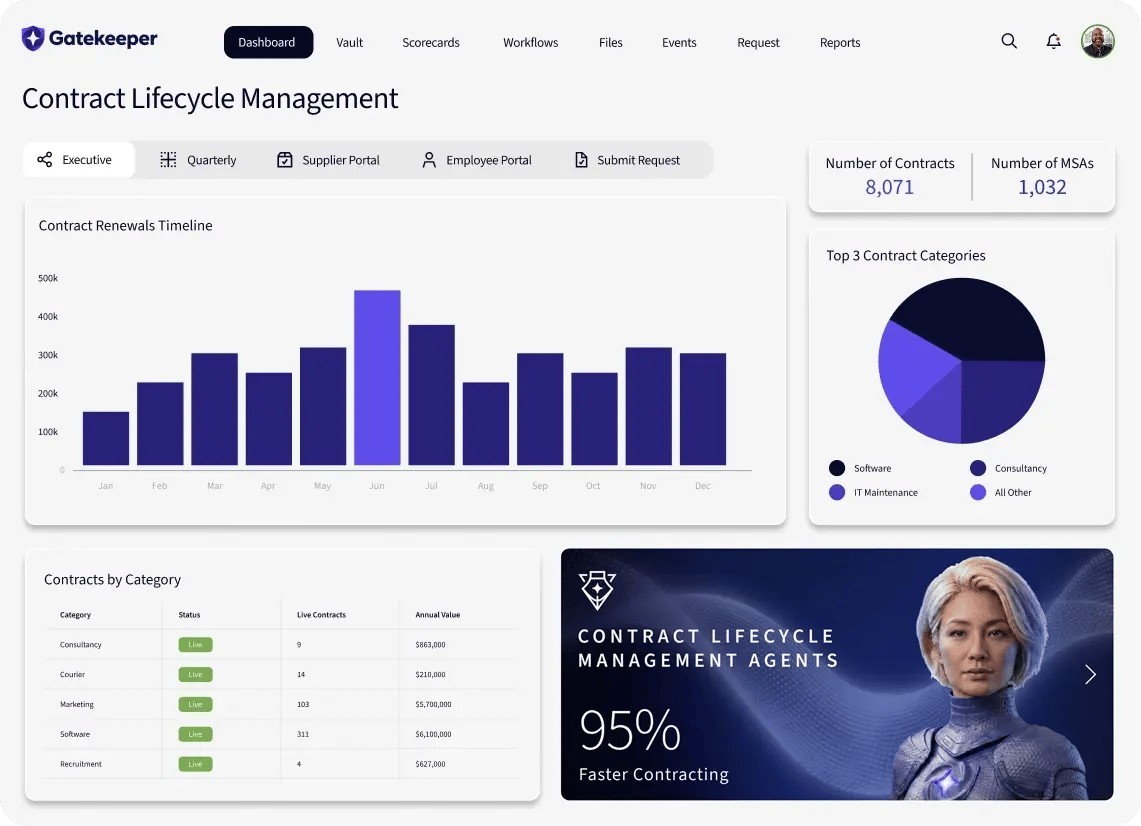
Contracts, spend, and vendors are connected.
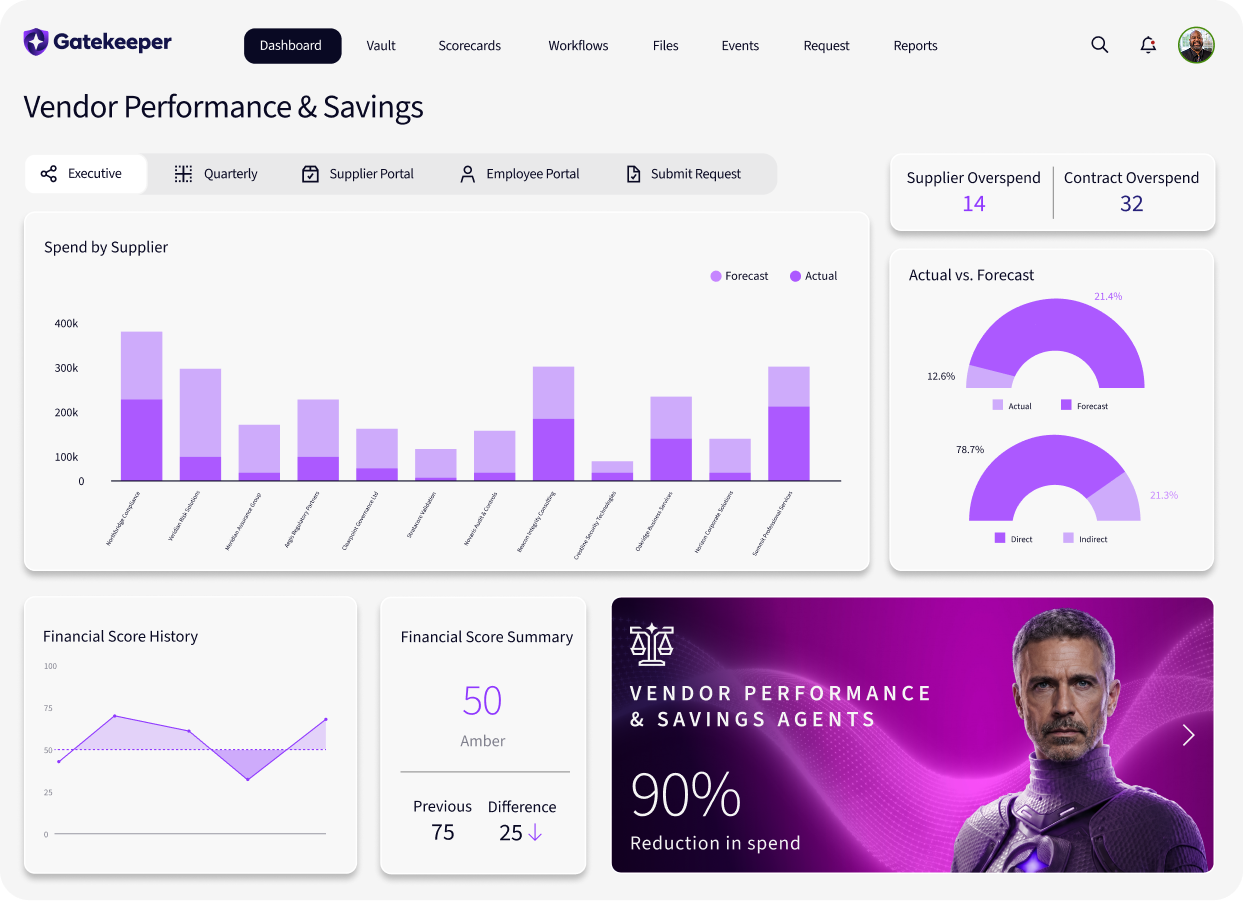
Right now they live in three different places. Gatekeeper puts the contract, spend, and vendor risk record on one screen. What did we agree, what are we paying, were they vetted. One answer, in one system, not three.
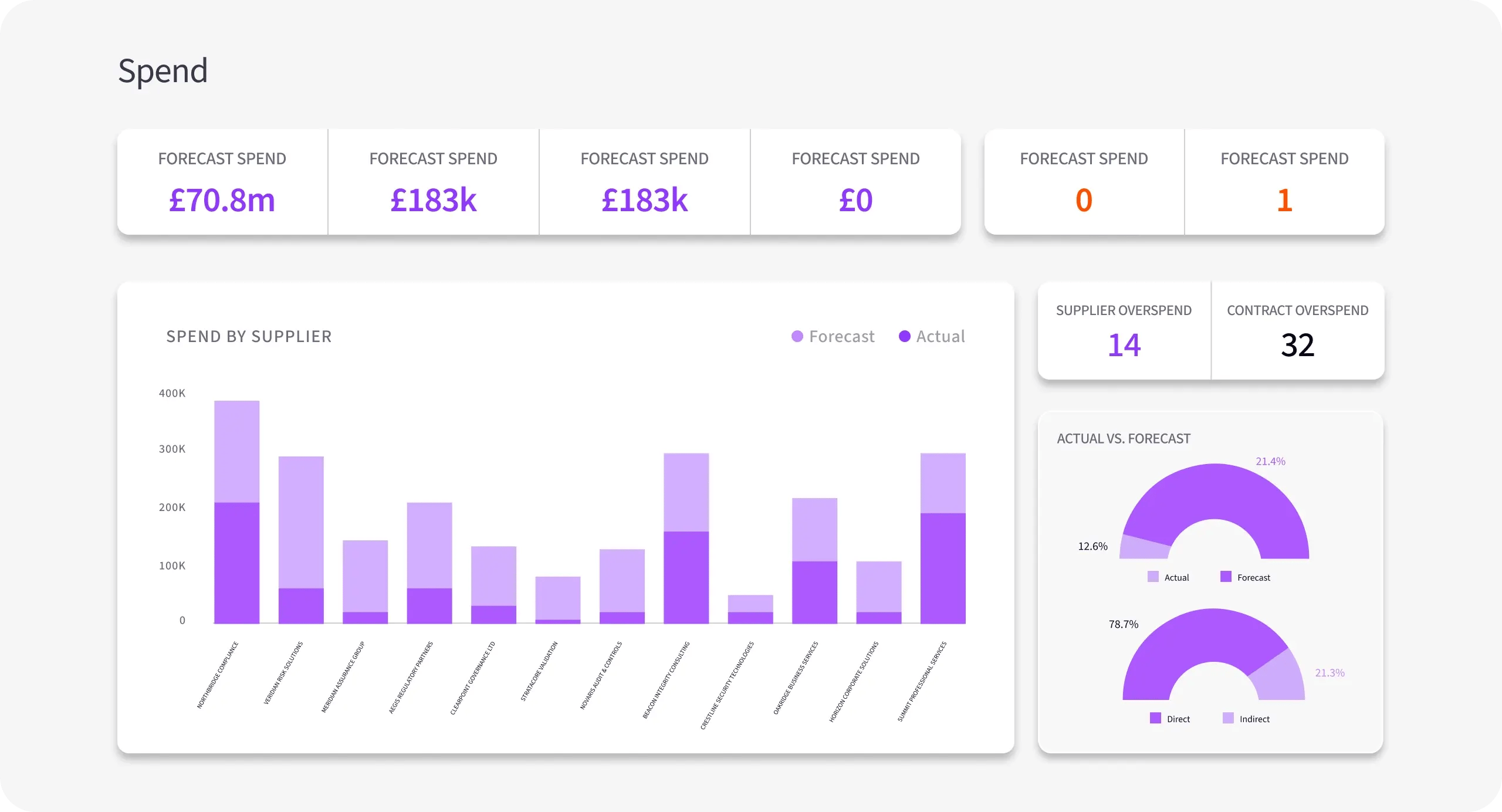
Stop auto-renewals, duplicate vendors, and six-figure surprises.
Overpayments, duplicate vendors, and contracts nobody reviews hide in spreadsheets.
Gatekeeper puts what the contract says you owe next to what you actually paid on the same vendor record.
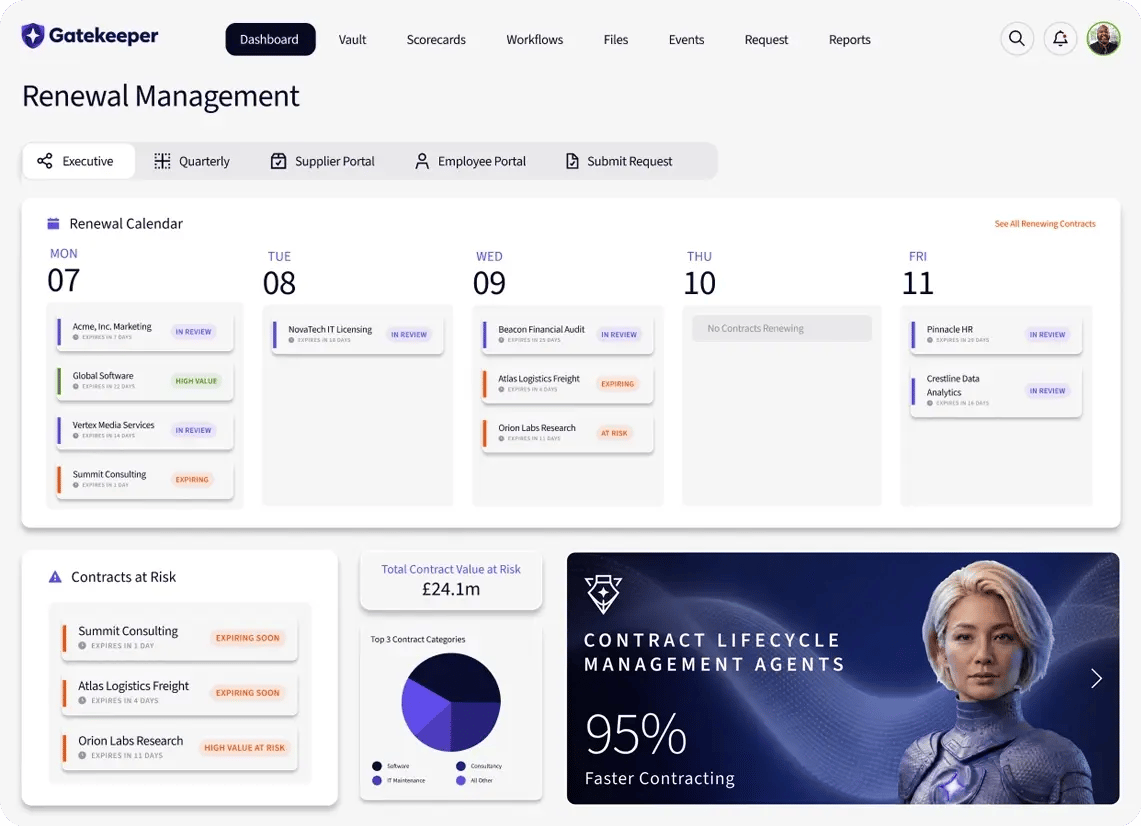
Every renewal becomes a decision. Forget surprises.
Gatekeeper surfaces contracts approaching their notice period and assigns them to the right person. If nobody acts, it escalates.
Your team sees what is coming up, what it costs and whether it should continue.
Know who you are paying and whether they've been vetted.
Finance teams approve spend on vendors that nobody has screened. Insurance lapses, certifications expire, and people often don't notice until an auditor asks for evidence.
Gatekeeper puts a governed onboarding process in front of every new vendor relationship, so your team never signs off on spend with a vendor that hasn't been checked.
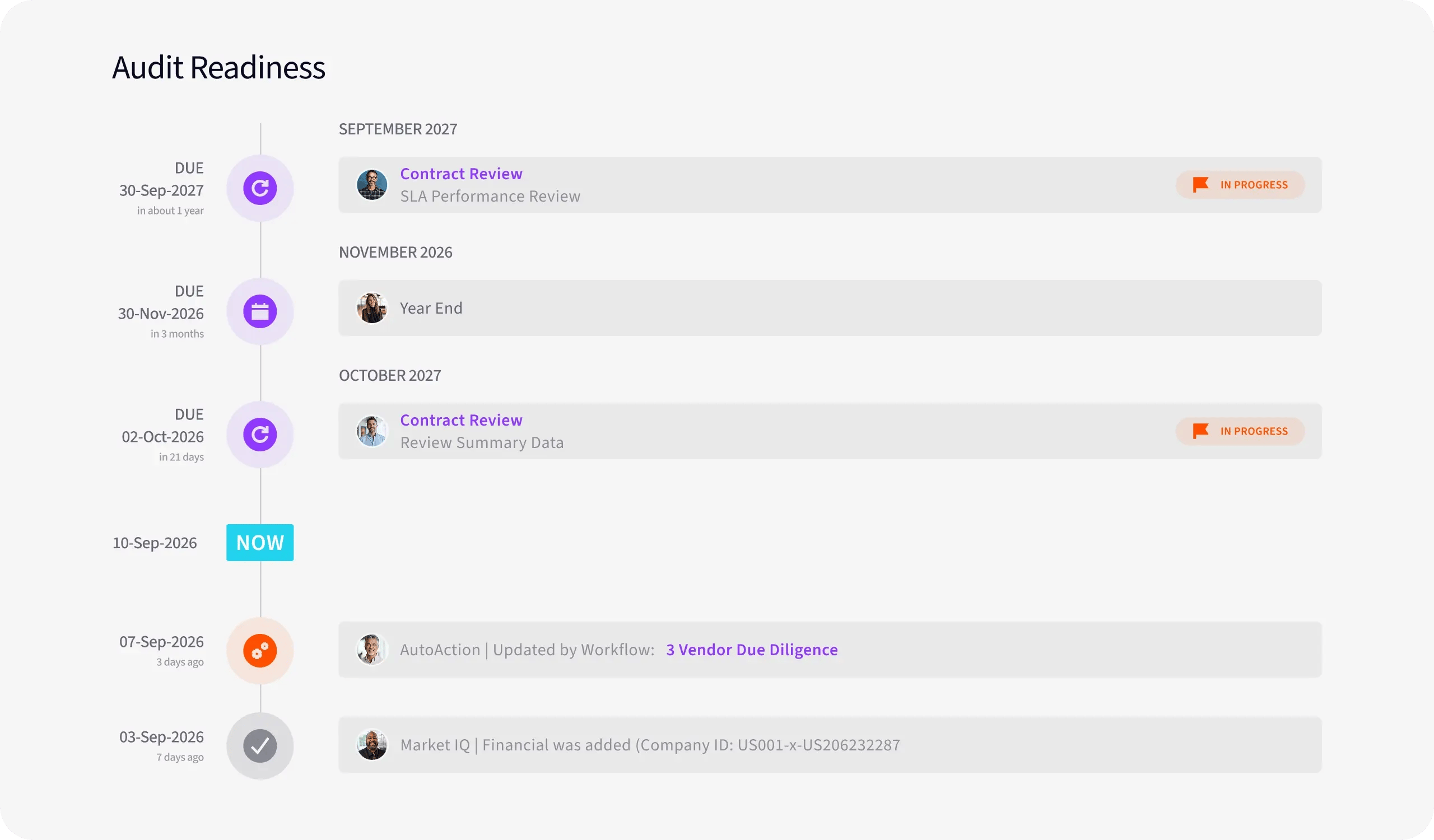
Build evidence as you work, not when the auditor arrives.
Approvals, due diligence, risk and compliance checks, insurance certificates and review dates are all recorded against the vendor with a timestamp and a name attached, so you can see the full history without chasing anyone for it.
The record is written as things happen, so nobody stitches it together the week before an audit.
Your team makes the decisions. Agents do the chasing.
AI Agents collect insurance certificates, chase missing due diligence, extract contract metadata from PDFs, and flag overdue obligations.
The execution work that buries a lean finance team is handled continuously.

Recognised by customers




Case studies
Real teams, real results.
-
 How Funding Circle found $1.3m in unnecessary vendor spend
case study
“Gatekeeper gives us excellent control and visibility of spend, which we have never had before. We have been able to terminate contracts that no longer serve us, with a total value of circa $1.3m.”
Krupa Patel
Head of Procurement, Funding Circle
Explore Funding Circle
How Funding Circle found $1.3m in unnecessary vendor spend
case study
“Gatekeeper gives us excellent control and visibility of spend, which we have never had before. We have been able to terminate contracts that no longer serve us, with a total value of circa $1.3m.”
Krupa Patel
Head of Procurement, Funding Circle
Explore Funding Circle
-
 How CompSource Mutual freed 17 weeks of capacity with Gatekeeper Agents
case study
“Deploying Gatekeeper's agents has been transformative for our organisation. It's freed up so much time for us to focus on more strategic projects, and it's really got our gears going on what we can do in the future.”
Tim Harvey
Procurement Director, CompSource Mutual
Explore CompSource Mutual
How CompSource Mutual freed 17 weeks of capacity with Gatekeeper Agents
case study
“Deploying Gatekeeper's agents has been transformative for our organisation. It's freed up so much time for us to focus on more strategic projects, and it's really got our gears going on what we can do in the future.”
Tim Harvey
Procurement Director, CompSource Mutual
Explore CompSource Mutual
-
 How The Telegraph centralised contracts and stopped missing renewals
Case study
“A significant amount of time each week was being devoted to what amounted to basic administrative tasks, tying up valuable internal resource.”
Paul Wilkinson
Procurement and Partnerships Manager, The Telegraph
Explore The Telegraph
How The Telegraph centralised contracts and stopped missing renewals
Case study
“A significant amount of time each week was being devoted to what amounted to basic administrative tasks, tying up valuable internal resource.”
Paul Wilkinson
Procurement and Partnerships Manager, The Telegraph
Explore The Telegraph
Expert insight & opinion
Related guides & resources.
Explore our insights, opinions, and product information on vendor & contract lifecycle management
-
 Guide
The Risk-First CFO's Playbook
Every CFO inherits vendor risk whether they asked for it or not. This playbook shows how finance leaders are turning vendor governance from a compliance burden into a source of margin protection and cost recovery.
Explore the findings
Guide
The Risk-First CFO's Playbook
Every CFO inherits vendor risk whether they asked for it or not. This playbook shows how finance leaders are turning vendor governance from a compliance burden into a source of margin protection and cost recovery.
Explore the findings
-
 Guide
First-Time Buyer's Handbook for VCLM
Covers how to assess what you have now, what to look for in a platform, what to avoid, and how to build the business case to get it approved. Written for teams buying vendor and contract management software for the first time.
Access the guide
Guide
First-Time Buyer's Handbook for VCLM
Covers how to assess what you have now, what to look for in a platform, what to avoid, and how to build the business case to get it approved. Written for teams buying vendor and contract management software for the first time.
Access the guide
-
Thought Leadership
A Guide to Vendor Lifecycle Management
Five chapters covering every stage of the vendor lifecycle, from onboarding and due diligence through to performance, renewals and exit. Includes eight checklists your team can use immediately to standardise how vendors are managed, no matter who handles the relationship.
Download the eBook