Skip to content
Back
April 3, 2025

The True Cost of Choosing the Lowest Bidder in Procurement

Learn why lowest-cost procurement can backfire and how value-based sourcing protects margins, reduces risk, and drives long-term growth.
Shannon Smith
Shannon Smith
<span id="hs_cos_wrapper_name" class="hs_cos_wrapper hs_cos_wrapper_meta_field hs_cos_wrapper_type_text" style="" data-hs-cos-general-type="meta_field" data-hs-cos-type="text" >The True Cost of Choosing the Lowest Bidder in Procurement</span>

Choosing the lowest bidder is often tempting for procurement teams seeking immediate savings.

However, Tim Harvey, Procurement Manager at CompSource Mutual Insurance Company, recently emphasised on Gatekeeper’s Procurement Reimagined podcast that this approach can lead to serious, hidden financial and strategic costs.

This article explores why the lowest bid isn't always the right choice and outlines steps procurement teams can take to adopt a more sustainable, value-driven strategy.


What are the pitfalls of Price-driven decisions?

Tim Harvey shared personal insights from his procurement career, recounting the problems encountered when decisions were driven solely by cost. “We awarded contracts purely based on price, and things went south almost immediately,” he explained.

Problems included increased change orders, costly delays, compromised quality, disrupted operations, damaged vendor relationships, and even contract cancellations.

Beyond these financial implications, price-led procurement often undermines the strategic role procurement can play within an organisation.

Instead of contributing to resilience, agility, and innovation, procurement becomes a transactional function with limited influence. This limits its ability to support broader organisational goals, including ESG commitments, digital transformation, and vendor diversity initiatives.

Strategic risks of lowest-price procurement

Selecting vendors based mainly on price can severely limit innovation and competitive advantage.

While low-cost vendors may win contracts initially, they frequently lack the necessary infrastructure, capabilities, or strategic alignment needed for long-term success.

Deloitte’s Global CPO Survey reports that 71% of procurement leaders consider vendor quality issues a major risk when prioritising price above all else.

A narrow focus on price can increase operational risks by reducing resilience, creating dependence on fewer vendors, and limiting flexibility.

CFOs must recognise that short-term financial gains from lowest-cost procurement frequently lead to long-term strategic vulnerabilities and missed opportunities for innovation.

how to Shift to value-Based procurement

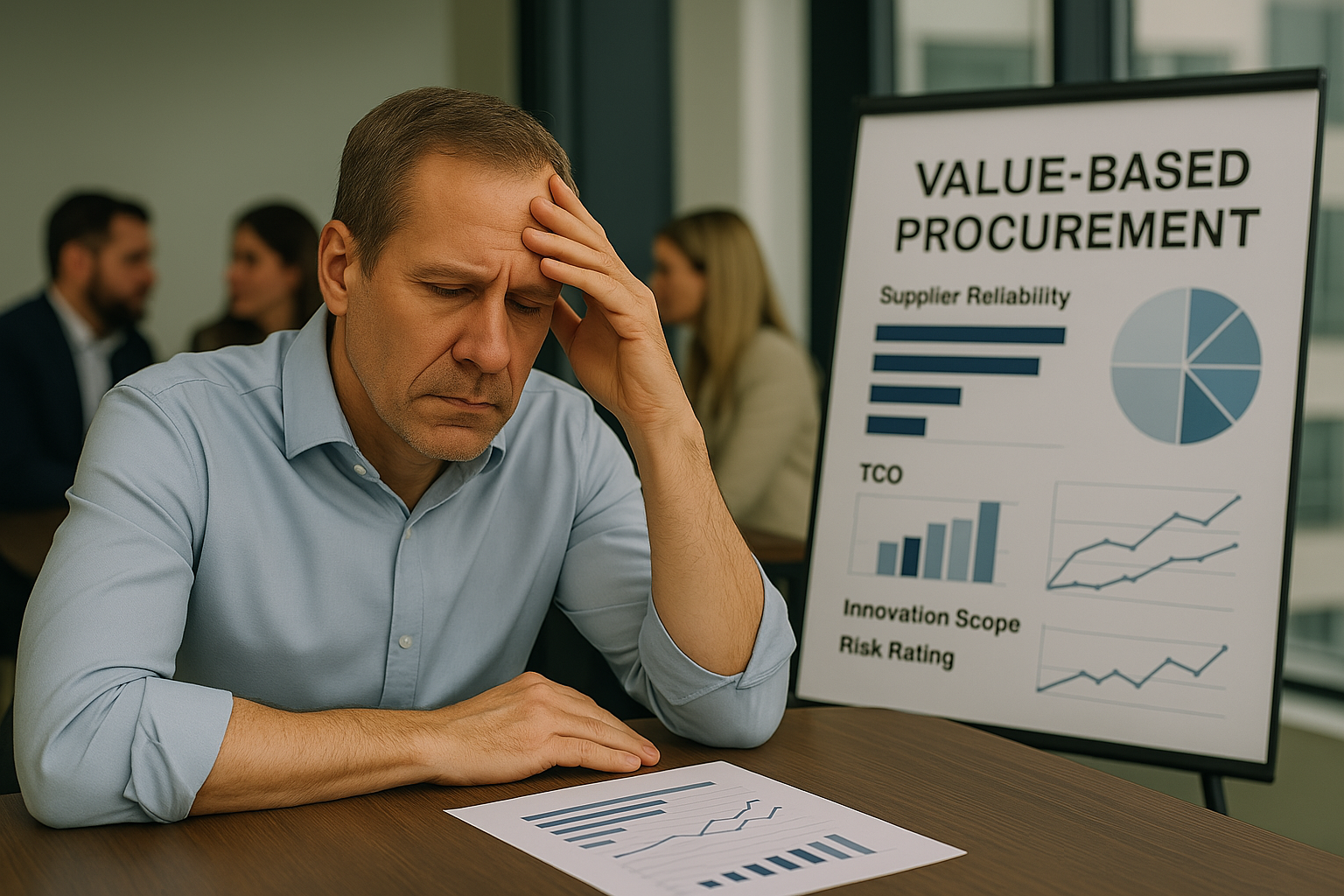
To avoid these risks, procurement teams need to incorporate broader, value-based evaluation criteria. Tim recommends considering factors beyond cost, including supplier reliability, quality, responsiveness, innovation capabilities, ethical standards, and risk management.

Here are practical steps procurement teams can follow to implement a value-driven approach:

  • Broaden Evaluation Criteria: Develop scoring systems that balance cost against quality, service reliability, innovation, sustainability, and supplier stability.
  • Total Cost of Ownership (TCO): Evaluate the complete lifecycle costs, considering maintenance, warranty, potential downtime, and wider operational impacts, not just initial prices.
  • Engage Stakeholders Early: Involve internal stakeholders from finance, operations, and risk management early in the procurement process to ensure comprehensive business needs are considered.
  • Leverage Technology: Use vendor and contract lifecycle management platforms like Gatekeeper to streamline vendor assessments, automate due diligence, monitor vendor performance, and generate actionable analytics.
  • Vendor Relationship Management: Develop strategic relationships with vendors through regular dialogue and collaborative problem-solving to align long-term objectives.

Why cFOs should support value-based procurement

CFOs have a crucial role in advocating for sustainable procurement strategies. By encouraging the use of broader evaluation criteria, CFOs ensure robust cost management, reduced risks, and strategic alignment across the organisation.

This approach supports long-term financial stability, operational resilience, and consistent growth.

CFOs must also champion the cultural shift required to move away from price-focused procurement. This means supporting procurement leaders with the right tools, KPIs, and executive backing to drive change across teams.

By doing so, they can unlock new sources of value, improve vendor outcomes, and enhance risk mitigation.

wrap up

Tim Harvey’s experiences underline an essential lesson for procurement leaders and CFOs: selecting suppliers solely based on the lowest price carries substantial hidden risks.

Adopting a value-based approach is critical for achieving reliable, innovative, and strategically sound procurement outcomes.

For organisations seeking long-term success, prioritising value over immediate cost savings is not just beneficial, it’s vital for future resilience and growth.

For further insights from procurement professionals, listen to Procurement Reimagined