Contract redlining - the process of reviewing, editing, and negotiating agreements - has long been a bottleneck, requiring extensive manual oversight to track changes, assess risks, and maintain policy alignment.
With rising contract volumes and increasing demands for speed, manual redlining is no longer sustainable. AI-driven contract redlining software is now essential, offering structured automation that accelerates contract negotiations, reduces errors, and minimises risk exposure.
Without it, legal teams risk falling behind, burdened by inefficiencies that stall business agility and increase compliance risks.
The challenges Posed by manual contract redlining
The legal profession has traditionally relied on manual contract review processes that are time-consuming, resource-intensive, and error-prone.
In highly regulated industries, where compliance is paramount, the risks associated with inefficient redlining processes are amplified. Legal teams find themselves trapped in a cycle of reactive work, drowning in a backlog of contract reviews while struggling to enforce policy adherence at scale.
According to EY Legal:
Without contract redlining software, legal professionals face several core challenges:
- Lengthy Negotiation Cycles: Each iteration of a contract requires extensive manual reviews, with back-and-forth exchanges between internal and external stakeholders, delaying execution and creating operational inefficiencies.
- Inconsistencies and Compliance Risks: Ensuring every contract adheres to internal guidelines, industry regulations, and risk management policies is challenging without standardised processes and dedicated clause libraries.
- Lack of Visibility Across Stakeholders: When multiple departments are involved in negotiations, tracking contract edits and maintaining a single source of truth becomes difficult, increasing the likelihood of miscommunication and missed risks.
- Resource Constraints: Legal teams are expected to handle increasing contract volumes with limited resources, meaning that manual redlining efforts drain time that could be better spent on strategic advisory work.
The inefficiencies of manual contract redlining are more than just an inconvenience—they have tangible business costs.
The Benefits of redlining software for legal efficiency
Organisations that embrace redlining automation gain:
- Accelerated contract turnaround times, reducing delays and driving faster revenue recognition.
- Stronger compliance, ensuring contracts align with corporate policies, applicable regulations and industry standards.
- Enhanced cross-functional collaboration, enabling legal, procurement, and finance teams to work seamlessly together.
Contract redlining software eliminates many of the inefficiencies associated with traditional contract negotiation processes. By combining automation with a centralised repository and intelligent workflows, legal teams can shift their focus from repetitive, manual tasks to high-value advisory work.
Key features of the best contract redlining software
The best contract redlining solutions provide a seamless experience for legal teams by integrating with existing workflows and AI, and offering comprehensive compatibility with commonly used document processing tools. Key features include:
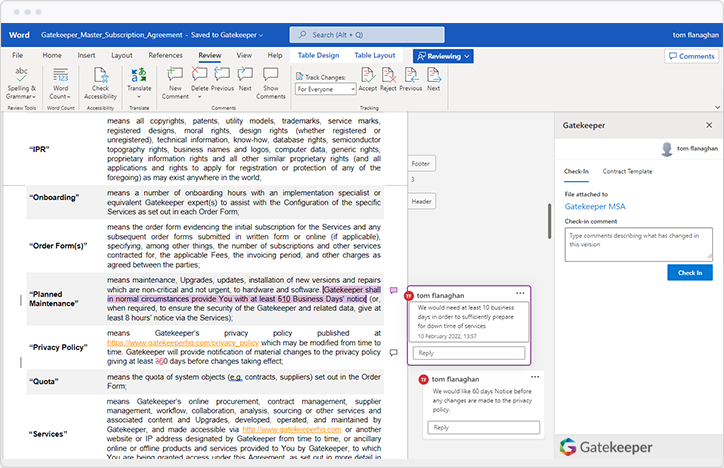
1. Full Microsoft Office Compatibility
A native Microsoft Word-compatible redlining solution that allows legal teams to work within their preferred document editor is a must. Whether working on vendor-supplied contracts or internal templates, teams can negotiate and redline contracts without disrupting their existing workflows.
This eliminates the need for clunky workarounds, file conversions, or version mismatches, ensuring that contract negotiations proceed smoothly without delays or confusion.
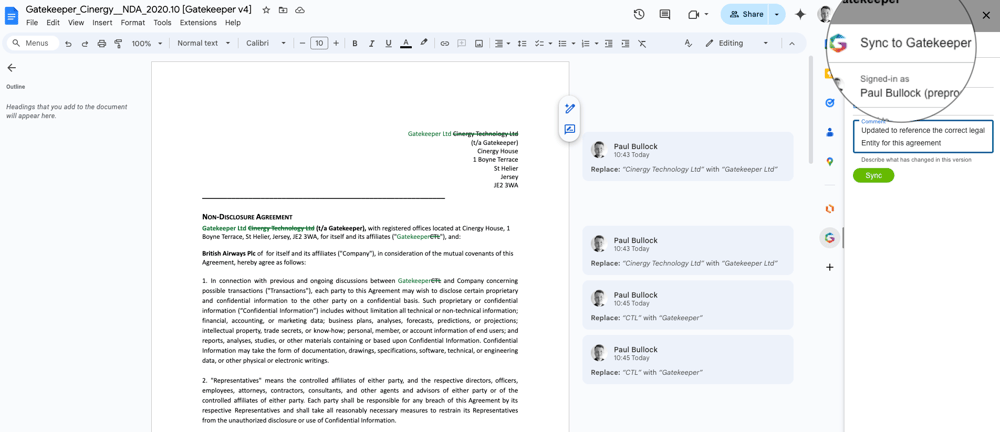
2. Office for the Web & Google Docs Integration
With seamless integration into Office for the Web and Google Docs, redlining software enables real-time collaboration without the need for document downloads or multiple conflicting versions.
By allowing legal teams to work in environments they are already familiar with, whether Microsoft Word, Google Docs, or Office for the Web, dedicated software removes the learning curve associated with adopting new tools.
Legal professionals can redline contracts within platforms they trust and use daily, enhancing usability and efficiency. This flexibility ensures that teams can focus on strategic contract negotiations rather than struggling with unfamiliar software, ultimately accelerating contract turnaround times and improving legal productivity.
3. AI-Driven Contract Drafting and Redlining
Contract redlining software enables legal, procurement, and vendor management teams to significantly reduce the manual effort involved in contract reviews - cutting negotiation times by up to 85%. This efficiency allows teams to prioritise critical activities such as post-signature contract oversight, ongoing performance management, and proactive risk mitigation.
AI-driven contract review, supported by lawyer-approved playbooks and advanced risk detection capabilities, empowers non-legal stakeholders to confidently manage contract revisions and compliance without frequent legal intervention.
This reduces bottlenecks, enabling legal professionals to concentrate their expertise on strategic advisory, governance, and broader organisational risk management.
-4.png?width=1000&height=498&name=image%20(11)-4.png)
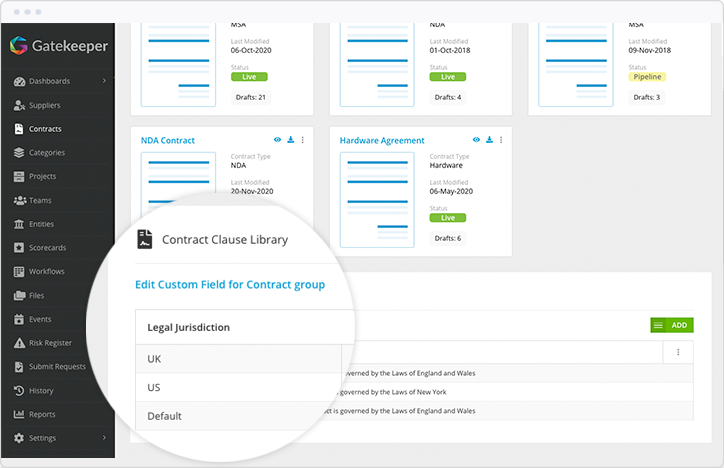
4. Contract Templates and Clause Library
Contract redlining software, such as eNegotiate, enables legal teams to generate unlimited contract templates with a single click. By dynamically inserting relevant data from contract records, teams can create fully pre-populated agreements without manual entry errors.
Access to a Clause Library allows organisations to automate contract generation using pre-approved, compliant legal language. This ensures that all contracts adhere to company policies while reducing the workload on legal teams by providing instant access to approved clauses.
5. Streamlined Negotiations with Centralised Collaboration
By providing a unified platform for legal, procurement, and vendor stakeholders, redlining tools centralise all contract edits, comments, and approvals in one place. This eliminates the back-and-forth of email-driven negotiations and ensures that all teams are aligned throughout the contract process.
Stakeholders can suggest changes, track revisions, and approve contracts in real-time, reducing the friction associated with lengthy negotiations. This improves efficiency while maintaining full visibility over contract edits and decision-making processes.
6. Real-Time Collaboration and Version Control
One of the major bottlenecks in contract negotiation is the lack of visibility into document revisions. The best contract redlining software eliminates version confusion by centralising document edits, maintaining a full revision history, and allowing real-time collaboration.
Stakeholders can leave comments, track changes, and approve revisions within a single platform, reducing the need for endless email exchanges and ensuring that all parties are working from the latest version of a contract.
The role of redlining in vendor and contract lifecycle management
Contract redlining doesn’t exist in isolation. To be truly effective, redlining software must integrate seamlessly with vendor and contract lifecycle management processes.
This ensures that contract negotiations are connected to the broader vendor and contract governance processes, allowing legal teams to monitor contractual obligations and vendor performance in a single ecosystem.
By bridging redlining with contract and vendor management, organisations can:
- Proactively manage vendor risks: Identify contractual risks before they impact vendor performance.
- Ensure contractual compliance: Automate tracking of key contract terms and obligations.
- Enhance operational efficiency: Reduce negotiation bottlenecks and improve business agility.
- Gain full visibility into vendor relationships: Connect contract data with vendor performance insights for strategic decision-making.
Legal teams that fail to align contract redlining with vendor and contract management risk missing critical insights that could prevent disputes, improve negotiation strategies, and drive better outcomes.
Wrap up
Choosing the best contract redlining software means selecting a solution that seamlessly integrates with existing workflows, offers robust AI-driven features, and enhances collaboration across teams.
Organisations that invest wisely in their technology choices will not only streamline contract negotiations but also strengthen compliance, minimise risks, and achieve greater business agility. If you're looking to implement the best contract redlining software into your business, book your Gatekeeper demo today.

 Integrations
Two-way data flow with the systems you already run.
Integrations
Two-way data flow with the systems you already run.
 NetSuite
Native two-way sync for vendor records, contracts and spend.
NetSuite
Native two-way sync for vendor records, contracts and spend.
 Why Gatekeeper
One platform instead of spreadsheets, inboxes and point tools.
Why Gatekeeper
One platform instead of spreadsheets, inboxes and point tools.